
Introduction
Search engine optimization is essential for any website that wants to attract organic traffic from search engines. While many SEO strategies exist, on-page SEO remains one of the most important because it focuses on optimizing elements directly on your website.
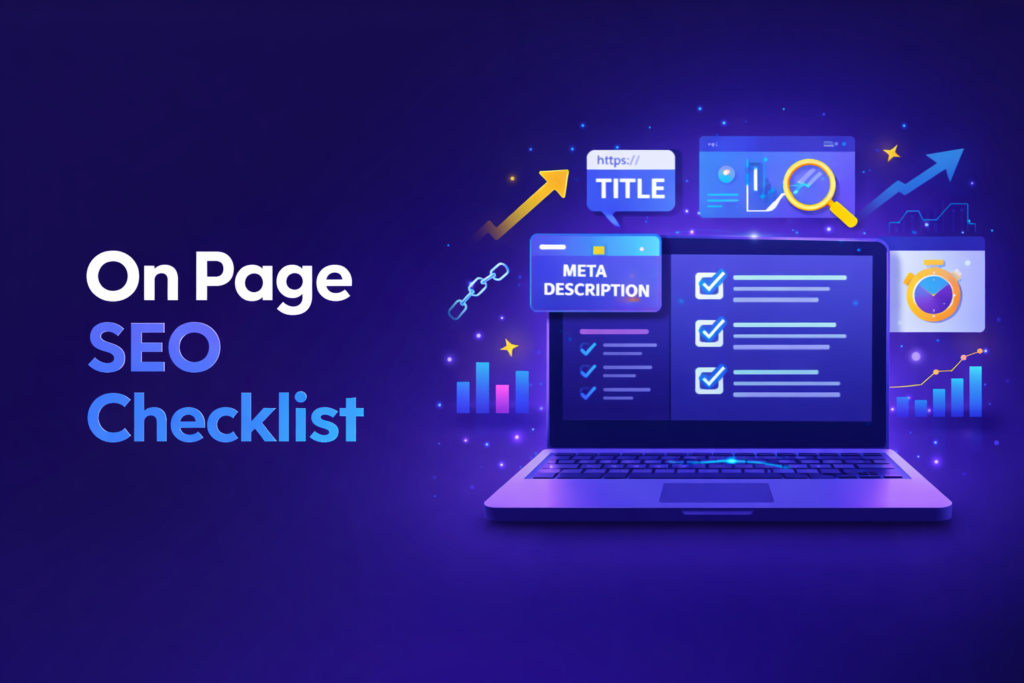
An effective on page SEO checklist helps website owners ensure that every important element of a webpage is optimized for search engines and users. From content quality to meta tags and page speed, each factor plays a role in improving search rankings.
This guide provides a clear and practical on-page SEO checklist that you can follow to improve your website’s visibility, enhance user experience, and increase organic traffic.
What is an On-Page SEO Checklist?
An on page SEO checklist is a list of optimization steps used to ensure that a webpage follows SEO best practices. It helps website owners review each important element before publishing or updating content.
The checklist usually includes:
- Keyword optimization
- Content quality
- Title tags and meta descriptions
- URL structure
- Image optimization
- Internal linking
- Page speed improvements
Following a structured checklist ensures that nothing important is missed during the optimization process.
Why an On-Page SEO Checklist is Important
Using a checklist simplifies SEO tasks and ensures consistency across all webpages.
Benefits of using an SEO checklist
- Improves search engine rankings
- Ensures better website structure
- Enhances user experience
- Helps search engines understand content clearly
- Reduces common SEO mistakes
- Supports long-term website growth
Without a checklist, many websites miss important optimization opportunities that could improve their performance.
Essential On-Page SEO Checklist
Below is a step-by-step checklist that covers the most important on-page SEO factors.
1. Keyword Research and Placement
Keyword research helps identify the terms users search for when looking for information related to your topic.
Best practices for keyword optimization
- Choose one primary keyword for each page
- Use related keywords naturally in the content
- Include the main keyword in the title and headings
- Avoid repeating the keyword excessively
Recommended keyword placement
- Page title
- Meta description
- H1 heading
- First paragraph
- Subheadings
- Image alt text
Proper keyword placement helps search engines understand the main topic of the page.
2. High-Quality and Valuable Content
Content is one of the most important factors in SEO. Search engines prioritize pages that provide helpful and relevant information.
Characteristics of strong SEO content
- Clear and easy to understand
- Well structured with headings
- Focused on solving user problems
- Updated and accurate
- Written for users, not just search engines
High-quality content increases user engagement and improves search rankings over time.
3. Optimized Title Tags
The title tag appears in search results and is one of the first elements users see.
Title tag optimization tips
- Keep the length under 60 characters
- Include the main keyword naturally
- Write clear and engaging titles
- Avoid duplicate titles
A well-written title can improve both rankings and click-through rates.
4. Effective Meta Descriptions
Meta descriptions provide a short summary of the page content in search results.
Although they do not directly affect rankings, they encourage users to click on the page.
Best practices for meta descriptions
- Keep them between 150–160 characters
- Clearly describe the page content
- Include the primary keyword naturally
- Write compelling text to attract clicks
5. Proper Heading Structure
Headings organize content and make it easier to read.
A good heading structure includes:
- H1: Main page title
- H2: Major sections
- H3: Supporting subtopics
Benefits of using headings properly:
- Improves readability
- Helps search engines understand content hierarchy
- Makes content easier to scan
6. SEO-Friendly URL Structure
A simple and descriptive URL helps users and search engines understand the page topic.
Example comparison
| URL Type | Example |
|---|---|
| SEO-friendly URL | example.com/on-page-seo-checklist |
| Non-optimized URL | example.com/page?id=2547 |
URL optimization tips
- Keep URLs short
- Use hyphens between words
- Include the main keyword
- Avoid unnecessary numbers and symbols
7. Internal Linking Strategy
Internal links connect different pages within your website. They help distribute authority and guide visitors to related content.
Benefits of internal linking
- Improves website navigation
- Helps search engines crawl pages
- Increases time spent on the website
- Strengthens content relationships
For example, an article about SEO can link to related topics like keyword research or technical SEO.
8. Image Optimization
Images make content more engaging but should be optimized for better performance and search visibility.
Image optimization checklist
- Use descriptive file names
- Add alt text for accessibility
- Compress images to reduce size
- Use modern formats like WebP
Optimized images help improve both page speed and SEO.
9. Page Speed Optimization
Page speed is an important ranking factor and greatly affects user experience.
Ways to improve page speed
- Optimize images
- Minimize CSS and JavaScript files
- Enable browser caching
- Use a Content Delivery Network (CDN)
- Choose reliable hosting
Faster pages reduce bounce rates and improve engagement.
10. Mobile-Friendly Design
Most users access websites from mobile devices, so mobile optimization is essential.
Mobile SEO checklist
- Use responsive website design
- Ensure text is easy to read on small screens
- Optimize images for mobile devices
- Test pages using mobile-friendly tools
Search engines prioritize mobile-friendly websites in rankings.
On-Page SEO Checklist Summary
The table below summarizes the most important on-page SEO tasks.
| SEO Element | Purpose |
|---|---|
| Keyword research | Identify search terms used by users |
| Content quality | Provide useful information |
| Title tag optimization | Improve visibility in search results |
| Meta description | Increase click-through rate |
| Heading structure | Organize content |
| URL optimization | Improve readability and indexing |
| Internal linking | Strengthen website structure |
| Image optimization | Improve performance and accessibility |
| Page speed | Enhance user experience |
| Mobile optimization | Support mobile users |
Following this checklist ensures that webpages meet essential SEO standards.
Common On-Page SEO Mistakes
Many websites fail to rank well because of avoidable mistakes.
Common issues include:
- Keyword stuffing
- Duplicate content
- Missing meta tags
- Poor internal linking
- Slow website speed
- Unoptimized images
Avoiding these problems can significantly improve search performance.
Frequently Asked Questions
What is an on-page SEO checklist?
An on-page SEO checklist is a list of tasks used to ensure that a webpage is properly optimized for search engines and users.
Why is on-page SEO important?
On-page SEO helps search engines understand webpage content and improves the chances of ranking higher in search results.
How often should on-page SEO be reviewed?
Webpages should be reviewed regularly, especially when updating content or targeting new keywords.
Can beginners follow an on-page SEO checklist?
Yes. Most on-page SEO tasks, such as optimizing headings and writing quality content, are easy to implement even for beginners.
Does page speed affect SEO rankings?
Yes. Faster websites provide better user experience and are more likely to rank higher in search engine results.
Conclusion
A well-structured on page SEO checklist is essential for optimizing webpages and improving search engine visibility. By following the right steps, website owners can ensure their content meets both user expectations and search engine requirements.
Key practices such as keyword optimization, high-quality content, internal linking, and page speed improvements all contribute to better rankings and user experience.
When these elements work together, websites gain stronger visibility in search results and attract more organic traffic over time.